
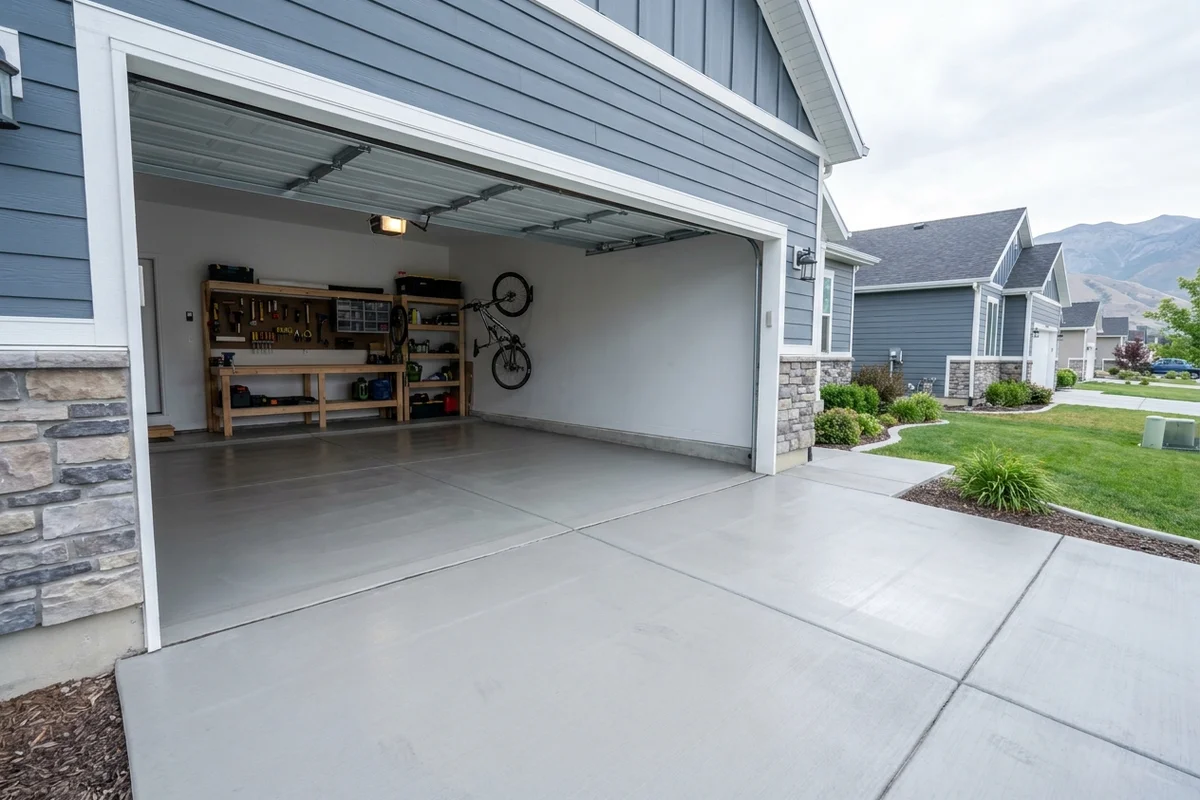
Garage Slabs & RV Pads
Structural pours for garage floors, shop slabs, and RV pads. Proper thickness, rebar, and drainage — engineered for the loads they actually carry. We pour. We don't coat.
Now booking April–October 2026 garage slab and RV pad pours along the Wasatch Front
Now booking April–October 2026 garage slab and RV pad pours along the Wasatch Front
We pour. We don't coat. Half the contractors who show up to bid a "garage floor" project want to grind, patch, and epoxy-coat your existing slab. That works if the slab underneath is structurally sound. If it isn't — cracking, heaving, sinking, or undersized for the loads you're putting on it — coating it just hides the problem until it gets worse.
BaseScape pours structural slabs from scratch. New garage builds, garage slab replacements where the existing pad is failing, RV pads for motorhomes and fifth-wheels, shop floors for residential workshops, lean-to and detached-structure slabs. We engineer the thickness, reinforcement, and drainage to the actual load — not the assumed load.
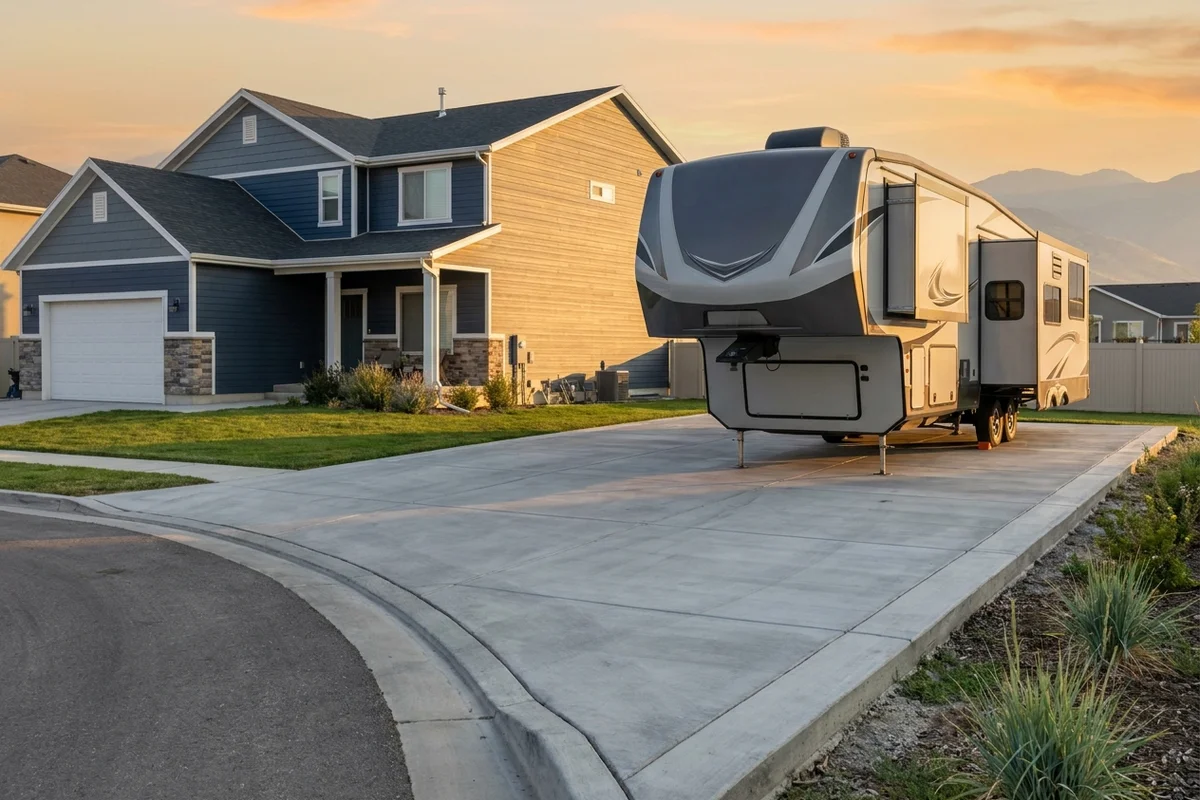
Typical residential garage: 4-inch slab, #4 rebar grid, air-entrained 4,000 psi mix, smooth trowel finish (epoxy-ready), vapor barrier under the slab, 1% slope to drain or floor drain. RV pads step up to 5–6 inches with engineered reinforcement and a thickened edge at the wheel load points. Shop slabs with heavy machinery loads get engineered case-by-case.
Structural Pour vs. Epoxy Coating — When Each Is the Right Call
| Approach | When It Fits | Cost (~600 sq ft) | Lifespan | What It Fixes |
|---|---|---|---|---|
| New structural pour | Slab is cracking, heaving, sinking, or undersized — OR no slab exists | $5,500–$9,000 | 30–40+ years | Structural problems, drainage, load capacity, anything below the surface |
| Epoxy / polyaspartic coating | Slab is structurally sound, just cosmetically tired or you want chemical resistance | $2,500–$5,000 | 5–15 years | Surface appearance, oil resistance, dust control |
| Grind-and-coat (resurface) | Slab has light surface damage but is structurally sound | $3,500–$6,500 | 10–20 years | Mild surface spalling, light cracking, color refresh |
Our Process
Free On-Site Estimate
A designer walks the site, evaluates the load (vehicle weights, equipment, frequency), assesses subgrade and drainage, and recommends slab thickness and reinforcement matched to your actual use. Written quote within 24 hours.
Demo (if needed), Subgrade & Drainage
Existing slab demoed and hauled off. Subgrade excavated to depth, compacted, and topped with 4 inches of compacted road base. Vapor barrier (10–15 mil) installed under interior slabs. Floor drains or perimeter drainage plumbed in where required.
Forms, Rebar & Pour
Forms set to grade with proper slope to drain. #4 rebar grid laid on chairs (not on grade) at 18″ on-center for standard residential, tighter for RV pads. Thickened edges formed at wheel-load points. Air-entrained 4,000+ psi concrete placed, screeded, floated, and finished — smooth trowel for interior garages, broom or smooth for RV pads per spec.
Cure & Walkthrough
Control joints sawcut within 12 hours. Curing compound applied. Slab protected 24 hours from foot traffic, 7 days from vehicle, 28 days from full load (RV, dumpster, equipment). Walkthrough covers cure schedule, joint pattern, and warranty.
Your Questions, Answered
Structural Safety
Slab thickness and reinforcement are spec'd to the actual load. Standard residential garage: 4-inch slab, #4 rebar grid, fiber mesh. RV pad: 5–6-inch slab with engineered reinforcement and thickened edges at wheel-load points. Shop floors with heavy machinery (lifts, presses, work trucks): engineered case-by-case, typically 6-inch with #5 rebar. Every interior slab gets a 10–15 mil vapor barrier under the pour to stop moisture migration.
Code Compliance
Detached garages, shops, and RV pads requiring zoning approval, setback verification, or building permits — BaseScape pulls every required permit and schedules every inspection. We coordinate with framers and structural engineers when the slab is part of a larger build (lean-to, detached structure, addition).
Drainage & Moisture
Slab is poured with positive slope to a floor drain, doorway, or perimeter. RV pads slope to the back or sides — never toward the garage door, where pooling water freezes in winter. Vapor barriers under interior slabs prevent the moisture migration that's the #1 cause of epoxy coating failure on existing slabs.
Cost & Affordability
Typical residential pricing on the Wasatch Front:
- 2-car garage slab (~440 sq ft, 4″ with rebar, vapor barrier): $4,500–$6,500
- 3-car garage slab (~660 sq ft): $6,500–$9,500
- RV pad (~300 sq ft, 6″ with engineered rebar): $3,500–$5,500
- Large RV / fifth-wheel pad (~500 sq ft, 6″ engineered): $5,500–$8,500
- Shop slab with heavy equipment loads: priced per engineered spec
Timeline
Typical garage slab or RV pad: 2–3 working days on-site (demo day → form/rebar day → pour day). Stay off the slab 24 hours; light vehicle traffic at 7 days; full RV or heavy equipment load at 28 days. From signed estimate to walkthrough is typically 2–3 weeks during pour season.
What Sets Us Apart
We pour. We don't coat. When you call us about a garage floor problem, we evaluate the slab honestly. If your existing slab is structurally sound and just needs a cosmetic refresh, we'll tell you a coating contractor is the right call — we don't pour new concrete to solve a coating problem. But if the slab is cracking, heaving, sinking, or undersized for your loads, no coating will hide that for long. The slab needs to come out. We do that work — full demo, engineered subgrade, structural pour, vapor barrier, drainage to spec — at the only point in the project where it can actually be fixed.
Still have questions? Drop your number and we'll call back within the hour — no pressure, just answers.
Frequently Asked Questions
Should I replace my garage slab or just coat it?
How thick should my RV pad be?
Do I need a permit for a garage slab or RV pad?
What's the difference between a garage slab and a driveway slab?
Can you pour a garage slab inside an existing structure?
Will my new garage slab handle a 4-post lift / car hoist?
How long before I can park on a new garage slab or RV pad?
Do you pour shop floors for woodworking, metalworking, or auto work?
BaseScape is a new Utah contracting venture pouring our first season along the Wasatch Front. We're licensed (DOPL #14082066-5501 B100), insured, and building the company one finished project at a time. Verify our license on Utah DOPL .
Ready to discuss your garage slabs & rv pads project?